Career
Do-Not-Hire List: The Hidden Lists in Hiring
The email arrives with practiced corporate politeness: “We’ve decided to move forward with other candidates.” It’s the same message you’ve received from this company before, multiple times. You’re qualified, your experience matches, but somehow, you never make it past the initial screening.
Here’s the uncomfortable truth: you can’t really know if you’re on a do-not-hire list. Companies don’t announce it and HR can’t tell you. If you’ve ever had that nagging doubt, that unsettling feeling something’s blocking you behind the scenes, this guide is for you. We’ll walk through what these lists actually are, how they work in today’s interconnected tech landscape where founders network at conferences and references flow through informal channels, and most importantly, what you can do about it.
What is a do-not-hire list AKA blacklist?
A do-not-hire list is an internal record maintained by companies to flag candidates they’ve decided not to employ, either temporarily or permanently. These lists go by several names: candidate blacklists, no-hire lists, or DNR (Do Not Rehire) lists, but they all serve the same purpose: to prevent specific individuals from being hired or rehired by that organization.
Here’s what most candidates don’t realize: these aren’t centralized databases accessible across all companies. Despite persistent myths about a universal HR do-not-hire list, each organization maintains its own internal system. However, the interconnected nature of tech hiring, particularly with the rise of back-to-office policies and in-person networking among hiring managers, means informal listing has become more prevalent than formal systems.
Formal vs. Informal Lists
Formal lists exist within structured HR systems and Applicant Tracking Systems (ATS). When a recruiter marks a candidate as “Do Not Hire” in systems like Workday, Taleo, or iCIMS, that designation follows the candidate through any future applications to that company. The flag might include notes explaining why: “Failed background check,” “Misrepresented qualifications,” or “Violated company policy.”
Informal lists are more insidious. These exist in recruiter notes, Slack conversations between hiring managers, or even mental notes. In our experience working with tech companies, we’ve seen how quickly reputation travels. A founder mentions a difficult candidate over coffee, a CTO shares a bad interview experience at a conference, a hiring manager warns their network about someone who ghosted after accepting an offer. The back-to-office movement has only amplified this: the “dark funnel” of reputation.
Why employers create Do-Not-Hire Lists?
Let’s be direct: companies don’t create do-not-hire lists to be vindictive. From an employer’s perspective, these lists serve legitimate business purposes.
Efficiency and administrative convenience
Hiring is expensive. The average cost-per-hire in tech ranges from $4,000 to over $20,000 when you factor in recruiter time, interview hours, and onboarding resources. When a company has already determined someone isn’t a fit, whether due to poor performance, cultural misalignment, or serious misconduct, blocking future applications saves time.
Risk mitigation and protecting company culture
Consider this: Meta reportedly maintains a “block list” of former employees marked as “non-regrettable attrition” or “do not hire.” While Meta claims only those who violate policies or have performance issues are blocked, former employees report being flagged even after receiving “At or Above Expectations” ratings. The practice isn’t unique to Meta. Amazon, Google, and Microsoft have all been alleged to maintain similar systems.
The logic is simple: if someone left under questionable circumstances or demonstrated behaviors that harmed the team, why risk bringing them back?
Policy enforcement andrehiring restrictions
Many companies include no-rehire clauses in severance agreements. If you sign a document accepting a severance package that explicitly states you cannot be rehired, that’s a contractual agreement, not a punitive measure. Organizations track these restrictions to ensure compliance.
How candidates end up on theselists
Understanding the triggers can help you avoid landing on one. Here are the most common reasons:
1. Resume dishonesty or misrepresentation
This is the fastest track to a permanent place on a do-not-hire list. Claiming you have a degree you didn’t earn, inflating job titles, or fabricating employment dates will get you flagged immediately if discovered—whether during the application process or years later.
2. Failed background checks
Discrepancies between what you claimed and what verification reveals can range from minor (wrong employment dates) to major (criminal history you didn’t disclose). The severity determines whether you’re temporarily or permanently blocked.
3. Poor interview behavior
Being unprepared is one thing; being unprofessional is another. Candidates who are consistently late, disrespectful to interviewers, or demonstrate serious attitude problems often get flagged. We’ve seen situations where candidates argued aggressively with technical interviewers or made inappropriate comments—behaviors that rightfully result in immediate disqualification.
4. Ghosting or no-shows
Accepting an offer and then never showing up on day one without communication is a cardinal sin. Companies invest significant resources in preparing for your arrival. When you ghost, especially for a senior technical role, you’ve potentially cost them weeks in their hiring timeline.
5. Negative reference feedback
This is where the “dark funnel” becomes real. When a hiring manager calls your previous employer and hears concerning feedback—even if it’s subtle or subjectively framed—that information gets logged. With tech professionals frequently moving between a relatively small ecosystem of companies, negative references have outsized impact.
6. Applying to dozens of positions simultaneously
Applying to every open role at a company, whether you’re qualified or not, signals desperation or a lack of focus. While not usually grounds for permanent blacklisting, it can get you flagged as someone who doesn’t understand their own skillset.
7. Departure circumstances from previous employment
How you left matters. Failing to give proper notice, abandoning company property, or having unresolved disciplinary issues during your notice period can all land you on a do-not-hire list. In the tech industry’s return-to-office era, where executives are spending more time together at industry events, these stories spread faster than ever.
The impact on job seekers
If you’re on a do-not-hire list, the effects can be devastating—and you might not even know it’s happening.
Difficulty finding new employment
You apply to positions where you’re clearly qualified. Your resume gets through the ATS. Then… silence. No interview. No feedback. Just the automated rejection. This pattern repeats across multiple applications to the same company or related organizations.
The challenge is that 98.4% of Fortune 500 companies use an ATS, and these systems retain historical data. Even if years have passed, that “Do Not Hire” flag remains visible to every recruiter who searches for your profile.
Damage to industry reputation
Tech is a surprisingly small world. When back-to-office policies brought executives back to in-person meetings, the informal exchange of candidate information accelerated. A do-not-hire at one FAANG company doesn’t formally transfer to another, but the effect can be similar. Hiring managers talk. References get called. Patterns emerge.
We’ve worked with highly skilled engineers who found themselves shut out of opportunities not because of performance, but because of how one contentious exit was described in reference calls. The reputation damage can persist for years.
Emotional and psychological consequences
The worst part? You usually don’t know if you’re on a list. You just experience rejection after rejection from companies where you should be competitive. The uncertainty breeds anxiety, self-doubt, and frustration. You start questioning your skills, your resume, your interview performance, everything except the one thing you can’t see: a database flag.
Legal & ethical considerations
Do-not-hire lists exist in a legally gray area that differs dramatically between the United States and Europe.
United States: Employer-friendly landscape
In the US, employment is largely “at-will,” meaning employers have broad discretion in hiring decisions. Do-not-hire lists are generally legal as long as they don’t discriminate based on protected characteristics (race, age, gender, religion, disability, etc.).
However, legal doesn’t mean ethical. Employment lawyer Spencer Hamer notes that if a do-not-hire list “contains a disproportionate number of people from a specific minority group, the practice could be deemed discriminatory.” Companies must ensure their blacklisting criteria are applied consistently and based on legitimate, non-discriminatory reasons.
The lack of transparency is the biggest issue. In most US states, employers have no obligation to tell you you’re on a do-not-hire list, explain why, or provide a path to removal.
Europe: GDPR changes everything
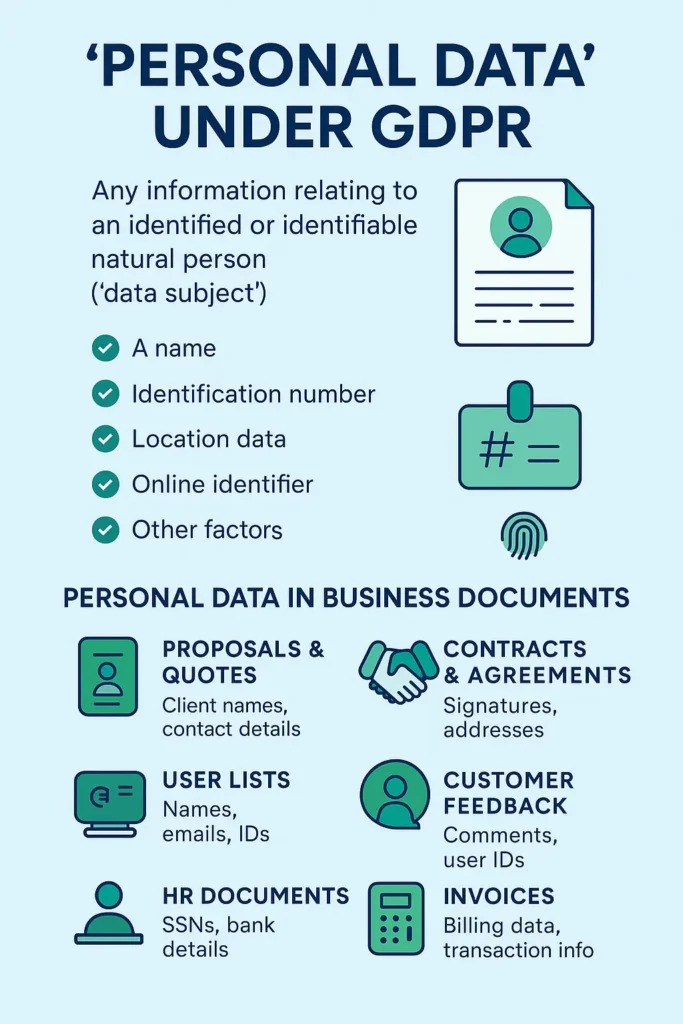
If you’re based in the EU or applying to companies with EU operations, your rights are substantially stronger thanks to the General Data Protection Regulation (GDPR).
Key protections under GDPR:
- Right to access: You can request to see what personal data a company holds about you, including any do-not-hire designations
- Right to rectification: If the information is inaccurate, you can demand it be corrected
- Right to erasure: In certain circumstances, you can request your data be deleted
- Transparency requirements: Employers must have a lawful basis for processing your data and must disclose what they’re tracking
Under GDPR, maintaining a do-not-hire without proper justification, documentation, or transparency can result in fines up to €20 million or 4% of global annual revenue, whichever is higher. This creates real incentive for European companies to maintain fair, documented, and defensible do-not-hire practices.
Important country-specific variations:
- Germany: One of the strictest. Requires explicit employee consent for tracking and monitoring. Covert surveillance or undisclosed blacklisting is nearly always illegal.
- France: Employers must inform employees in writing before using monitoring systems that could flag them
- Spain: Monitoring and blacklist policies must be included in employment contracts
The contrast is stark: US candidates have minimal visibility and limited recourse, while EU candidates have legal tools to discover and potentially challenge their do-no-hire status.
How to avoid ending up on a do-not-hire list
Prevention is always easier than remediation. Here’s what you can control:
Resume accuracy and truthfulness
This cannot be overstated: never lie on your resume. Not about degrees, not about dates, not about job titles. In an era where background checks are automated and LinkedIn histories are permanent, fabrications will be discovered.
Instead of exaggerating, focus on what you actually accomplished. If you were a “Senior Software Engineer” but not technically a “Lead,” say so. If you contributed to a project but didn’t lead it, frame your role accurately. Honesty builds trust; dishonesty destroys it permanently.
Maintaining a professional online reputation
Hiring managers Google you. They check your GitHub. They review your LinkedIn. They might even look at your Twitter/X history.
Action items:
- Keep your LinkedIn current and consistent with your resume
- Contribute thoughtfully to technical communities
- Avoid inflammatory or unprofessional social media content
- Build a portfolio that demonstrates your skills
Following up respectfully after interviews
Persistence is good; pestering is not. After an interview, send a brief thank-you note. If you don’t hear back within the stated timeline, one polite follow-up is appropriate. Beyond that, you risk annoying the very people whose decision you’re awaiting.
The reference strategy most candidates miss
Here’s insider knowledge from our recruitment experience: proactively offer references before employers ask.
When you’re in final-stage conversations, volunteer something like: “I‘m happy to provide references from my previous role. Would you like me to connect you with my former engineering manager or the product lead I worked most closely with?”
This does two things:
- It signals confidence in your work history
- It lets you control the narrative by choosing references who will speak positively
But there’s a critical step most people skip: Ask your references what they plan to say. Use this exact approach:
Email Template for Requesting Reference Feedback:
Subject: Reference Request + Would Love Your Perspective
Hi [Name],
I’m currently in the interview process for a [Job Title] role at [Company], and they may be reaching out to you as a reference. I wanted to give you a heads up and also ask for your candid perspective.
If you were asked to describe my work on [Specific Project/Team], what would you highlight? I want to make sure I’m accurately representing our collaboration in my interviews.
Also, if there’s anything you think I could improve or any concerns you’d have about recommending me, I’d genuinely appreciate hearing that feedback directly. I’d rather know now than be surprised later.
Thanks so much for your time and support. Let me know if you need any context about the role or if there’s anything I can clarify.
Best,
[Your Name]
This approach accomplishes multiple goals: it’s respectful, it gives your reference time to prepare, and most importantly, it reveals if someone might give you a negative reference. If they respond with hesitation or vagueness, that’s your signal to find a different reference.
Reaching out to old colleagues
Don’t wait until you need references. Maintain relationships proactively. Send occasional check-ins to former managers and teammates. Congratulate them on promotions. Comment thoughtfully on their LinkedIn posts. When you eventually need a reference, you’re not cold-calling someone you haven’t spoken to in three years.
In recruitment, we see this pattern repeatedly: candidates with strong professional networks have far fewer issues with reference checks and blacklisting. The relationships you build while employed become the safety net when you’re job hunting.
What Employers Should Consider
If you’re on the hiring side, do-not-hire lists aren’t inherently problematic—but they require careful management.
Implementing a fair and documented process
Every do-not-hire designation should include:
- The specific reason (documented with facts, not opinions)
- The date of the designation
- Who made the decision (for accountability)
- Review date (most issues shouldn’t result in permanent blacklisting)
Avoid subjective language like “bad attitude” or “not a culture fit.” Instead, document specific, observable behaviors: “Candidate was 45 minutes late to final interview without notice” or “Background check revealed employment dates discrepancy of 18 months.”
Allowing appeals or review mechanisms
People change. Someone who was a poor fit five years ago might be perfect for a different role today. Consider implementing:
- Time-based removal (e.g., most flags expire after 2-3 years unless involving serious misconduct)
- A review process where flagged candidates can request reconsideration
- Clear criteria differentiating temporary blocks from permanent bans
At Omnes Group, when we work with clients on their hiring practices, we advocate for balanced approaches that protect companies without unnecessarily closing doors to talented professionals who may have made recoverable mistakes.
The risk of biased lists
This is where legal exposure increases. If your do-not-hire list disproportionately includes people over 40, or women, or members of specific ethnic groups, you have a discrimination problem—even if individual decisions seemed justified.
Regular audits of do-not-hire lists should check for disparate impact. If 60% of your do-no-hire list consists of candidates from one demographic group but that group only represents 20% of your applicant pool, investigate immediately.
How to get off a Do-Not-Hire List?
The hard truth: you probably can’t know for certain if you’re on a list, and even if you are, removal is difficult.
But difficult doesn’t mean impossible. Here’s your action plan:
Step 1: Assess the likelihood without spiraling
First, let’s acknowledge something important: if you’re worried about being blocklisted, that concern is valid. Job searching is stressful enough without invisible barriers. But before you assume the worst, let’s look at the actual patterns that might signal a problem:
Legitimate red flags:
- You’ve applied to the same company 5+ times over several years with zero responses, even for roles you’re clearly qualified for
- You consistently get to final rounds, then rejection immediately after reference checks
- Internal referrals from well-connected employees aren’t resulting in even initial screenings
More likely explanations:
- Your resume isn’t optimized for their ATS (extremely common)
- The roles genuinely have stronger-fit candidates
- Your application materials need work
- You’re applying to roles that don’t match your experience level
- The company simply isn’t hiring as actively as their job posts suggest
The reality? Most rejections have nothing to do with blacklists. Tech hiring is competitive, ATS systems are imperfect, and sometimes timing just doesn’t work out. If you’re getting interviews elsewhere but struggling with one specific company, that’s worth investigating. If you’re struggling everywhere, the issue is likely your application approach, not a secret list.
Step 2: Investigate your references
This is where you actually can take action. Contact your previous employers’ HR departments with this script:
“I’m currently job hunting and want to ensure my employment record is accurate. Can you confirm what information you provide when companies call for employment verification? And separately, am I eligible for rehire at your organization?”
In the US, many companies only confirm dates of employment and job title to minimize legal risk. But some will answer the “eligible for rehire” question with a yes or no—and if it’s no, you’ve found your problem.
For references you provided, have the honest conversation outlined earlier. If someone can’t give you a positive reference, thank them for their honesty and remove them from your reference list.
Step 3: Build an alternative path
When direct applications aren’t working, leverage personal connections. In tech hiring, the reality is that referrals bypass many of the automated screening processes, including ATS flags.
Action items:
- Identify people in your network who work at your target companies
- Ask for informational interviews (not referrals) to learn about the company
- Demonstrate your expertise and enthusiasm in those conversations
- After building a genuine connection, then ask if they’d be comfortable recommending you
When someone internally advocates for you, they’re essentially vouching that any historical concerns aren’t relevant. It doesn’t guarantee you’ll override a do-no-hire list, but it creates a human conversation instead of an automated rejection.
Step 4: Contact HR Directly (if you really have to)
If you strongly suspect you’re on a do-not-hire list at a specific company, you can try directly contacting their HR department:
“I’ve applied for several positions at [Company] over the past [timeframe] that aligned with my qualifications, but I haven’t received interviews. I’m wondering if there’s something in my application history preventing me from being considered. If so, I’d appreciate the opportunity to understand and address any concerns.”
Be professional and non-confrontational. Most companies won’t engage, but some might—especially if the issue was a misunderstanding or if enough time has passed.
Step 5: Time-based recovery
Here’s something employment experts consistently emphasize: most do-no-hire lists shouldn’t be permanent. Unless you committed serious misconduct (theft, harassment, violence), time works in your favor.
If you had a bad exit from a company three years ago, reapply. Hiring managers change. Company policies evolve. Your resume is stronger with additional experience. The person who flagged you may no longer work there.
When enough time has passed, the question shifts from “Why did they leave badly?” to “What have they accomplished since?” Make sure your answer to that second question is compelling.
Industry & Global Trends
The tech sector’s approach to do-not-hire lists reflects broader shifts in how the industry manages talent.
Return to office and the informal network effect
The pandemic-era of remote work inadvertently reduced informal blacklisting. Hiring managers worked from home. Fewer industry conferences. Less casual conversation about candidates.
Now, with major tech companies mandating office returns, the landscape has shifted. When executives from Meta, Google, Amazon, and Microsoft are in the same buildings, attending the same events, and having the same conversations, reference information flows more freely. This “dark funnel” of reputation-sharing has reemerged stronger than before.
The meta example and performance-based layoffs
Meta’s 2025 layoffs targeted “low performers”—reportedly 5% of its 72,000+ workforce. But here’s what makes this relevant to do-not-hire discussions: multiple former employees reported that their performance ratings mysteriously dropped from “At or Above Expectations” to “Meets Most” just before termination, and they later discovered they were on internal block lists preventing rehire.
This raises uncomfortable questions: If companies can retroactively change performance ratings to justify layoffs, how trustworthy are the criteria for do-not-hire designations?
The practice isn’t unique to Meta. As tech companies navigate tighter budgets and AI-driven efficiency demands, we’re seeing more performance-based workforce reductions—and more workers finding themselves unexpectedly flagged.
Large corporations vs. startups
Fortune 500 tech companies are more likely to maintain formalized do-not-hire systems within their ATS. The sheer volume of applicants (Google receives millions annually) necessitates systematic tracking.
Startups, conversely, often rely on informal knowledge. In a 50-person company, the head of engineering probably remembers everyone they’ve interviewed. The problem comes during hypergrowth, when that institutional knowledge disappears and no formal tracking system exists.
Working with tech companies across the growth spectrum, we see the pattern: the best-run organizations have clear, documented, time-bound blacklist policies. The worst either have no system (creating inconsistency) or have permanent, undocumented bans based on individual grudges.
Myths vs facts about candidate blacklists
Let’s separate reality from anxiety.
Myth: There’s a universal do-no-hire list shared across companies
Fact: No centralized database exists. Do-not-hire lists are company-specific, though informal networks mean information can spread.
Myth: Being blacklisted means you’ll never work in tech again
Fact: You might be blocked from one company, but the industry is vast. Even if you’re on Meta’s do-not-hire list, that doesn’t prevent Google, Amazon, startups, or any of thousands of other companies from hiring you.
Myth: ATS systems automatically reject do-no-hire candidates
Fact: ATS systems flag candidates, but humans make final decisions. Internal referrals and hiring manager advocacy can sometimes override flags.
Myth: Once on a list, you’re on forever
Fact: Many companies implement time-based removal (typically 2-5 years for non-serious offenses). Circumstances change, and people deserve second chances.
Myth: Companies will tell you if you’re blacklisted
Fact: In the US, they’re under no obligation to disclose this. In the EU, GDPR gives you the right to request this information, but enforcement varies.
Myth: Bad interviews get you blacklisted
Fact: You’d have to perform spectacularly poorly. Most bad interviews just result in rejection for that specific role. You can and should reapply later.
Myth: Asking about salary or negotiating gets you blacklisted
Fact: Absolutely not. Professional salary negotiation is expected and respected. Only unreasonable or unprofessional behavior during negotiations might raise flags.
Conclusion
Do-not-hire lists exist in the shadows of tech hiring—a reality that’s both more mundane and more impactful than most candidates realize. They’re not the vengeful blacklists of industry-wide conspiracy theories, but they’re not harmless administrative tools either. In an ecosystem where reputation travels through informal networks, conference conversations, and quick reference calls, understanding how these lists work is essential for anyone navigating tech careers.
The bottom line for candidates: Focus on what you can control. Be honest on your resume. Maintain professional relationships. Build a network that knows your actual work quality. Choose references carefully and have honest conversations with them. Most importantly, don’t let anxiety about potential do-no-hire list paralyze you—the vast majority of rejections have nothing to do with secret lists.
The bottom line for employers: Do-not-hire lists serve legitimate purposes, but they require thoughtful implementation. Document everything. Set expiration dates for most flags. Audit regularly for bias. Remember that people grow and change. The candidate who was wrong for a role five years ago might be perfect today.
In our work connecting talented tech professionals with the right opportunities, we’ve seen how crucial fair, transparent hiring practices are. When companies approach blacklisting thoughtfully—using it to prevent genuine problematic behavior rather than as a catch-all rejection tool, and when candidates approach their careers with integrity and professionalism, the system works better for everyone.
The hiring world isn’t perfect, and do-not-hire lists are part of that imperfection. But with awareness, proactive management, and a commitment to fairness on both sides, they don’t have to derail careers or expose companies to legal risk.
Your professional reputation is your most valuable asset. Protect it, maintain it, and remember: in tech, your next opportunity is often just one genuine connection away.
FAQs
Q: How do I know if I’m on a company’s do-not-hire list?
A: Unfortunately, in the US, there’s no guaranteed way to find out. Companies aren’t required to disclose this information. However, you can ask your previous employer’s HR department if you’re “eligible for rehire”, some will answer honestly. In the EU, you can submit a GDPR data access request to see what information a company holds about you. Signs you might be blacklisted include: repeatedly getting rejected from the same company despite being qualified, sudden rejections after reference checks, or ghosting after initial positive responses.
Q: Can I legally be blacklisted for quitting without notice?
A: Yes. In the US, employment is typically at-will, meaning companies can choose not to hire you for any non-discriminatory reason. Leaving without proper notice is a legitimate business concern, it signals unreliability. Many companies have policies automatically flagging employees who don’t give proper notice as “not eligible for rehire.” However, circumstances matter. If you left due to a family emergency or safety concern, that context could potentially be considered if you address it proactively.
Q: Are do-not-hire lists legal?
A: Generally, yes—in both the US and EU, as long as they don’t discriminate based on protected characteristics (race, age, gender, religion, disability, etc.). The key legal risk is disparate impact: if your blacklist disproportionately includes people from protected groups, that could be grounds for discrimination claims. In the EU, GDPR adds additional requirements around transparency and data protection, but properly managed do-not-hire lists remain legal.
Q: How long do companies keep you on a do-not-hire list?
A: It varies by company and reason. Minor issues (bad interview, poor communication) might result in a temporary flag that expires after 1-2 years. More serious concerns (failed background checks, dishonesty) could result in permanent blocks. Best-practice companies implement review periods—typically 2-5 years—after which most flags are reconsidered. Serious misconduct (theft, harassment, violence) usually results in permanent blacklisting. The lack of industry standards means each company sets its own policies.
Q: Can I get removed from a do-not-hire list?
A: It’s challenging but sometimes possible. Options include: (1) Contacting the company’s HR directly to request reconsideration, especially if significant time has passed or circumstances have changed; (2) Getting a strong internal referral that vouches for you; (3) In the EU, using GDPR to request your data, correct inaccuracies, or in some cases request deletion; (4) Simply waiting, many flags expire after several years; (5) Demonstrating significant professional growth through your subsequent career trajectory. There’s no guaranteed process, but persistence and professionalism can sometimes work.
Q: Will a do-not-hire list at one company affect my applications elsewhere?
A: Not directly. There’s no centralized do-no-hire database. However, informal networks matter, especially in tech. If hiring managers know each other or if reference calls reveal concerning patterns, information can spread. The “dark funnel” of reputation is real, particularly in specialized sectors or geographic hubs like Silicon Valley, where executives frequently interact. That said, the tech industry is vast. Being blacklisted at one company, even a major one like Meta or Google, doesn’t prevent hundreds of other organizations from hiring you.
Q: What’s the difference between being on a do-not-hire list and just being rejected?
A: Standard rejection means that for that specific role, at that specific time, you weren’t the best fit. You can and should reapply for other roles. A do-not-hire flag means the company has decided not to consider you for any position, often indefinitely. The key difference: rejection is role-specific; blacklisting is company-wide. However, because companies rarely disclose do-no-hire status, from a candidate’s perspective, multiple rejections from the same company might indicate either scenario—or simply that you’re not matching their current needs.