Omnes News
EU Pay Transparency 2026: Must know guide for HR Leaders

The recruitment landscape is undergoing its most significant regulatory shift in decades. By June 7, 2026, every EU member state must implement the Pay Transparency Directive—legislation that fundamentally changes how you advertise roles, discuss compensation, and structure your hiring process.
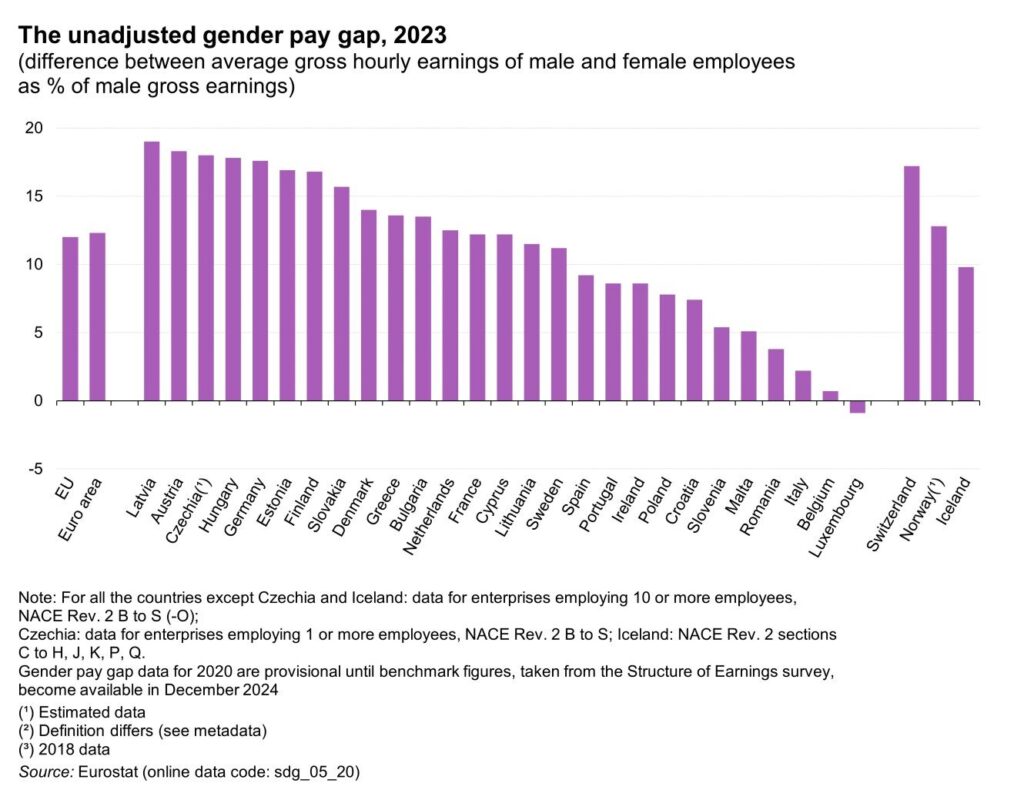
For HR managers and founders building teams in the current talent market, this isn’t just another compliance checkbox. The directive addresses a persistent reality: across the European Union, women earn approximately 88 cents for every euro earned by men, with the unadjusted gender pay gap standing at 12.0%.
What makes this particularly challenging is that without pay transparency, both employers and employees often have no way of knowing when discrimination is occurring, especially when disparities stem from unconscious bias.
Here’s what the directive means for your recruitment operations, and how the shift toward transparency will impact your ability to attract and retain technical talent.
EU Pay Transparency Directive Core Requirements
The directive establishes three fundamental transparency obligations that affect every stage of your recruitment and employment lifecycle:
1. Salary Transparency in Job Advertisements
Starting June 2026, you’ll need to disclose salary ranges or starting salaries in job postings—or provide this information before the interview stage. This applies whether you’re posting on your careers page, LinkedIn, or specialized job boards. The days of “competitive salary” placeholders are ending.
For technical roles where compensation structures can be complex, this means defining clear bands for each level. If you’re hiring for Junior, Mid-Level, and Senior Full Stack Developers, you’ll need disclosed ranges for all three levels, not just a single developer salary bracket.
2. Prohibition on Salary History Inquiries
The directive explicitly bans asking candidates about their previous compensation. This requirement aims to break the cycle where historical pay discrimination follows candidates throughout their careers. Your interview scripts and application forms will need updating to remove these questions entirely.
3. Enhanced Gender Pay Gap Reporting
The reporting requirements follow a staggered rollout based on company size:
- Companies with 250+ employees: Annual reporting required, first report due June 2027 (covering 2026 data)
- Companies with 150-249 employees: Reporting every three years, starting June 2027
- Companies with 100-149 employees: Reporting every three years, starting June 2031
- Companies with fewer than 100 employees: No reporting requirement (though individual member states may impose stricter rules)
Any gender pay gap exceeding 5% triggers a mandatory joint pay assessment with employee representatives. You’ll need to investigate the causes and implement corrective measures—this isn’t optional.
Foundational Articles: Purpose and Scope
- Article 1 establishes the directive’s core objective: strengthening equal pay between men and women through mandatory transparency measures.
- Article 2 defines the scope broadly—covering both public and private sector employers, applying to anyone with an employment contract or employment relationship.
- Article 3 clarifies that “pay” encompasses base salary plus any additional compensation, whether cash or benefits, received for work performed.
- Article 4 requires EU member states to establish objective methodologies for assessing work value, ensuring clear definitions of “equal work” or “work of equal value.”
Transparency Requirements for Recruitment
- Article 5 is where recruitment gets interesting. You have two compliance options:
- Publish salary ranges directly in job advertisements
- Provide salary information via email before the first interview
Both approaches require you to simultaneously stop asking about candidates’ salary history. The technical implementation matters here—if you’re using an ATS (Applicant Tracking System), you’ll need to configure it to capture and display salary ranges while blocking historical compensation fields.
- Article 6 extends transparency to internal career progression, requiring that compensation structures and advancement criteria be readily accessible to all employees. This affects how you communicate technical career ladders—your engineering team needs to understand exactly how progression from Senior Developer to Staff Engineer impacts compensation.
Employee Rights and Reporting
- Article 7 grants employees the right to request information about pay levels for roles involving equal work or work of equal value. Crucially, it also prohibits pay secrecy clauses—you cannot prevent employees from discussing salaries among themselves.
- Article 8 ensures accessibility compliance, requiring that all transparency information be available in formats accessible to employees with disabilities.
- Article 9 details gender pay gap reporting mechanics: format requirements, submission frequency, and employees’ rights to request explanations when gaps are identified.
- Article 10 addresses the 5% threshold. When your reporting reveals a gender pay gap exceeding 5% that cannot be justified through objective, gender-neutral criteria, you must conduct a joint pay assessment with employee representatives. This assessment must be shared with all employees.
- Article 11 provides that member states must offer technical assistance and training to smaller employers (fewer than 250 employees) to support compliance.
- Article 12 confirms all data handling must align with GDPR requirements.
Enforcement and Remedies
- Article 13 emphasizes social dialogue, requiring member states to ensure worker representatives play a key role in implementing national legislation.
- Articles 14-17 establish the enforcement framework:
- Article 14: Court procedures must be available for employees to enforce equal pay rights
- Article 15: Worker associations and representatives can support employees in discrimination cases
- Article 16: Compensation for discrimination must include full back pay, lost bonuses and benefits, and damages for moral harm
- Article 17: Courts can order immediate cessation of discriminatory practices
- Article 18 shifts the burden of proof to employers in pay discrimination cases. Once an employee demonstrates a potential pay gap, you must prove discrimination did not occur—not the other way around.
- Articles 19-22 cover assessment methodologies, evidence disclosure requirements, limitation periods for filing claims, and lawsuit cost allocation.
- Article 23 requires member states to establish penalties that are effective, proportionate, and dissuasive. Translation: fines significant enough to ensure compliance.
Additional Provisions
- Article 24 extends requirements to public procurement, requiring transparency in public contracts and concessions.
- Article 25 protects whistleblowers, prohibiting retaliation against employees or representatives who report discrimination.
- Articles 26-30 handle technical matters: connections to previous directives, member states’ ability to implement more protective measures, equality body establishment, monitoring requirements, and preservation of collective bargaining rights.
- Articles 31-35 address implementation timelines, reporting obligations, and transposition into national laws.
How this impacts your recruitment strategy
Job advertisement restructuring
The shift toward salary transparency in job postings affects tech recruitment particularly intensely. Here’s why this matters for technical roles:
Market Positioning Becomes Visible
When you’re competing for backend engineers with Kubernetes experience, your compensation strategy is now public knowledge. Candidates will comparison-shop before applying. This forces a more sophisticated approach to compensation design—you can’t simply offer “competitive salary” and adjust based on negotiations.
Level Definition Becomes Critical
With candidates able to see salary ranges across organizations, the way you structure seniority levels directly impacts candidate attraction. If your “Senior Developer” range overlaps with competitors’ “Mid-Level Developer” range, you’ll either attract over-qualified candidates or lose talent to better-calibrated opportunities.
Regional Compensation Complexity
For companies operating across multiple EU markets, the directive creates interesting challenges. Do you maintain country-specific ranges, reflecting local market rates? Or standardize compensation EU-wide for consistency? The latter promotes equity but may make you uncompetitive in high-cost markets like Munich or Amsterdam.
The Longer-Term Impact: Compensation structure overhaul
Beyond recruitment, the directive forces a fundamental rethinking of how you structure and communicate compensation:
Career Progression Transparency
Your technical career ladder needs documentation that employees can actually access. What differentiates a Senior Backend Engineer from a Staff Backend Engineer? What skills, scope, and impact define each level? And critically—what compensation corresponds to each tier?
This level of clarity benefits both recruitment and retention. Developers can see where they stand and what’s required to advance, reducing the “leave to get a raise” dynamic that plagues the tech industry.
Pay Equity Reviews Become Ongoing
The 5% threshold for mandatory pay assessments means you can’t wait for annual reviews to catch compensation issues. Companies must implement ongoing pay equity reviews, gender-neutral job evaluation frameworks, and strong pay governance to avoid triggering mandatory assessments with employee representatives.
For fast-growing tech companies where compensation decisions happen frequently, this requires systematic approaches to pay, not ad-hoc negotiations.
Strategic Considerations: Competitive dynamics
First-Mover Advantage
While the directive mandates compliance by June 2026, companies implementing transparency earlier gain positioning advantages. In markets where engineering talent remains scarce, early transparency signals progressive culture and can differentiate your employer brand before competitors adapt.
Global Headquarters vs. Local Operations
Here’s a complexity many international companies are navigating: if your headquarters is outside the EU but you have EU employees, you must still comply with the directive for those workers. However, companies often find it simpler to implement transparency organization-wide rather than maintaining separate systems for EU and non-EU employees.
This creates interesting market dynamics. EU-headquartered companies that adopt transparency globally will pressure local competitors in non-EU markets to follow suit to remain competitive—particularly for roles where remote work enables candidates to choose between EU and non-EU employers.
Implementation Timeline and National Variations
The June 2026 Deadline for EU-member states
While June 7, 2026 represents the EU-wide deadline, implementation is proceeding unevenly:
Early Movers:
- Sweden, Belgium, Poland, and Ireland have published implementing legislation or are furthest along in the process
- Malta and Poland have passed partial implementation laws addressing pay transparency elements
Delayed Implementation:
- The Netherlands has officially postponed implementation until January 1, 2027, citing administrative complexity and political instability
- Germany has experienced delays, with draft legislation still pending despite being Europe’s largest economy
Countries With Existing Frameworks:
- France already requires gender pay gap reporting for companies with 50+ employees through its Gender Equality Index, but will need to adjust to align with EU requirements
- Germany has national pay transparency legislation since 2017, but it’s less stringent than the directive and requires substantial revision
What Delays Mean for Employers
Even if your primary operating country delays implementation, you should proceed with preparation. Here’s why:
- Direct Effect Principle: Once the June 2026 deadline passes, employees may be able to invoke directive provisions directly in court, even if national legislation isn’t finalized
- Cross-Border Operations: If you operate in multiple member states, you’ll need compliance systems that work across different implementation timelines
- Competitive Pressure: Early-adopting countries will establish market norms that spread to neighboring markets, regardless of legal requirements
Compliance Elements
1. Salary Structure Documentation
You need documented, objective criteria for determining compensation. The directive requires gender-neutral evaluation based on factors like:
- Skills and qualifications
- Effort and responsibility
- Working conditions
- Nature of tasks
For technical roles, this means clearly defining what distinguishes compensation levels. Is it years of experience? Specific technical skills? Project complexity? Team leadership responsibilities? Your criteria must be documented and consistently applied.
2. Job Posting Process Redesign
Every job posting workflow needs updating:
Add:
- Salary ranges for each position level
- Clear job titles that indicate seniority
- Transparent compensation criteria
Remove:
- Questions about salary history
- Pay secrecy or confidentiality clauses
- Vague compensation language (“competitive salary”)
3. Gender Pay Gap Analysis Infrastructure
Even if you’re not immediately subject to reporting requirements, building the analytical capability now prevents scrambling later. You need systems that can:
- Track compensation by gender across equivalent roles
- Identify gaps exceeding 5%
- Document objective justifications for any differences
- Generate required reports in the format your member state specifies
4. Employee Communication Framework
The directive grants employees specific information rights. You need processes for:
- Responding to employee requests for pay information
- Explaining how compensation decisions are made
- Communicating career progression and corresponding pay changes
- Making compensation structures accessible to all employees
5. Negotiation Protocol Updates
Salary negotiations require new boundaries. Your hiring managers need training on:
- Discussing compensation without asking about salary history
- Explaining how your offer aligns with published ranges
- Addressing candidate questions about pay equity
The Compliance Risk Landscape
Burden of Proof Reversal
Article 18 is particularly significant: once an employee demonstrates a potential pay discrepancy, you must prove discrimination didn’t occur. This flips traditional litigation dynamics and makes documentation of compensation decisions critical.
If you fail to meet transparency obligations, the burden of proof automatically shifts to you, requiring proof that discrimination did not occur. The only exception is when you can demonstrate violations were minor and unintentional.
Financial Penalties
Member states must establish penalties that are effective and dissuasive. While specific amounts vary by country, fines can reach €10,300 per violation in some jurisdictions. For companies with hundreds of employees, multiple violations could accumulate substantial penalties.
Compensation Requirements
Employees who experience pay discrimination are entitled to full remediation, including:
- Complete back pay covering the full period of underpayment
- Lost bonuses and benefits
- Compensation for moral damages
For long-standing pay gaps, this exposure can be significant—particularly for senior technical roles where compensation differences compound over time.
Reputational Implications
Beyond legal consequences, non-compliance or identified pay gaps carry employer branding risks:
Public Scrutiny
Gender pay gap reports must be made available to employees and, in some member states, published publicly. In the tech sector where company culture and values influence talent decisions, public pay equity issues can damage recruitment efforts.
Talent Flight
Research shows 86% of job seekers are less likely to accept a role if their recruitment experience is poor. Pay transparency failures contribute to poor candidate experience, as do unclear or unfair compensation practices revealed during the hiring process.
Special Considerations: Edge Cases
Contractors and Freelancers
The directive specifically applies to workers with “employment contracts or employment relationships as defined by law.” This excludes traditional contractors and freelancers.
However, this creates complexity in practice. Many tech companies work with contractors whose arrangements might legally qualify as employment relationships in some member states, depending on factors like:
- Degree of control and supervision
- Economic dependence on a single client
- Use of company equipment or workspace
- Integration into company operations
If you’re working with independent contractors in the EU, review whether local law might classify these relationships as employment, bringing them under directive requirements.
Internships and Apprenticeships
Treatment varies by member state. Some countries explicitly exclude interns engaged under formal internship agreements, while others may include them. Check your specific jurisdiction’s implementing legislation.
Non-EU Headquarters with EU Employees
If your company is headquartered outside the EU but employs people in EU member states, the directive applies to those EU employees. You cannot avoid compliance by maintaining non-EU headquarters—the rules follow the employee’s location.
Preparing for the Transition
Step 1: Start with an audit
Before communicating new transparency policies, conduct comprehensive compensation analysis:
- Map existing pay structures against objective criteria
- Identify unexplained gaps that exceed 5%
- Document justifications for any legitimate differences
- Develop remediation plans for unjustifiable disparities
Announcing transparency before understanding your current state creates unnecessary risk. Address issues before they become public.
Step 2: Build systems before deadlines
Implementation requires infrastructure updates across multiple systems:
ATS Configuration:
- Add mandatory salary range fields
- Remove salary history questions
- Configure range publication for job postings
HRIS Updates:
- Enable gender-disaggregated compensation tracking
- Build reporting capabilities for gap analysis
- Create employee self-service access to compensation information
Document Management:
- Centralize compensation policy documentation
- Make career progression frameworks accessible
- Establish version control for compliance evidence
Step 3: Invest in manager training
Your hiring managers and team leads need preparation for transparency conversations. Equip them to:
- Explain how compensation decisions are made
- Discuss ranges confidently during recruitment
- Address employee questions about pay equity
- Document compensation rationale consistently
Step 4: Consider market positioning proactively
The directive’s transparency requirements create an opportunity to reassess your compensation philosophy:
- Market Data Analysis: Research what competitors offer for equivalent roles. When ranges become public, candidates will comparison-shop. Ensure your positioning is defensible.
- Internal Equity Review: Some companies discover that historical hiring practices created compression or inversion issues—where newer hires earn more than longer-tenured employees in equivalent roles. Address these before transparency makes them obvious to your team.
- Total Rewards Communication: If base salary ranges seem uncompetitive, strengthen messaging around total compensation: equity, benefits, flexible work arrangements, learning budgets, and other non-cash elements that differentiate your offers.
Looking Ahead: The Broader Talent Market Impact
How Transparency Reshapes Competition for Technical Talent
The directive’s implementation will accelerate existing trends in tech hiring:
Skills-Based Hiring Intensifies
With salary transparency, 70% of recruiters report struggling to find candidates with the right skills, making skills-based hiring approaches increasingly important. When compensation is public, the focus shifts to clearly articulating what skills justify different pay levels.
Employer Branding Becomes Data-Driven
Including salary ranges in job postings attracts 44% more candidates, while building a trustworthy employer brand through pay transparency. Companies that approach transparency strategically—not just as compliance—will differentiate in crowded talent markets.
Internal Mobility Gains Importance
With external salary ranges visible, employees can easily compare their compensation to market rates. This creates retention challenges but also opportunities. Companies with clear internal progression paths and transparent advancement criteria can reduce the “leave to get a raise” dynamic by showing employees how to grow within the organization.
AI and Automation in Pay Equity
AI tools are becoming essential infrastructure in modern tech hiring, from screening CVs to structuring interviews and predicting success. Pay transparency requirements will likely accelerate adoption of AI-powered compensation tools that:
- Analyze market data for competitive positioning
- Identify pay equity issues before they require remediation
- Suggest appropriate ranges for new roles based on criteria
- Monitor compensation decisions for pattern bias
However, this creates new compliance considerations. The EU AI Act requires transparency in automated decision-making, including bias audits for AI tools used in employment decisions. Pay equity AI will need careful governance.
The Global Ripple Effect
While the directive applies only to EU member states, its influence extends beyond European borders:
UK Considerations
Though not directly impacted by the directive post-Brexit, UK policymakers are considering similar measures, with pressure mounting to match EU standards to remain competitive for talent that can work for EU or UK employers remotely.
North American Alignment
Pay transparency laws are expanding across US states and Canadian provinces. The EU directive’s comprehensive framework may influence these regional efforts, creating de facto global standards for multinational companies.
Tech Industry Leadership
Major tech companies often implement policies globally for consistency, even when not legally required everywhere. As EU-based or EU-operating tech companies adopt transparency, this creates competitive pressure for the broader industry to follow suit.
Conclusion: Transparency as strategic advantage
The EU Pay Transparency Directive represents more than a compliance obligation—it’s a fundamental shift in how compensation works in the European talent market. By June 2026, salary secrecy will be largely eliminated, forcing companies to defend their compensation strategies with objective data rather than information asymmetry.
For HR managers and founders building technical teams, this creates both challenges and opportunities:
The Challenge: You must build infrastructure for systematic pay equity, invest in compensation analysis, and prepare for more informed salary negotiations where candidates know market rates before conversations begin.
The Opportunity: Companies that approach transparency strategically—implementing clear career frameworks, competitive ranges, and objective pay criteria—can differentiate in talent markets where others struggle with hasty compliance.
What separates successful implementations from reactive scrambles is timing. The companies navigating this transition best are those treating June 2026 not as a deadline, but as the end of a multi-year transformation toward more systematic, equitable compensation practices.
The clock is ticking. The question isn’t whether transparency is coming—it’s whether you’ll be ready when it arrives.
Key Takeaways
- June 7, 2026 is the implementation deadline for EU member states to transpose the directive into national law
- Salary ranges must be disclosed in job postings or before interviews—no more vague “competitive salary” language
- Salary history inquiries are banned—you cannot ask candidates about previous compensation
- Gender pay gap reporting is mandatory for companies 100+ employees, with frequency based on size
- 5% threshold triggers action—any unexplained gender pay gap over 5% requires joint assessment and remediation
- Burden of proof shifts to employers in discrimination cases once a pay gap is demonstrated
- Contractors are excluded, but verify whether local law classifies your arrangements as employment relationships
- Global companies with EU employees must comply, regardless of headquarters location
- Implementation delays are happening, but don’t wait—compliance infrastructure takes time to build
- Transparency creates competitive advantages for companies that implement thoughtfully rather than reactively