Career
What is a fake job posting and how to spot it?

The tech hiring landscape has shifted dramatically. Four in ten companies posted fake job listings in 2024, and research from Greenhouse shows that between 18 and 22 percent of jobs posted online are “ghost jobs” with no actual hiring activity behind them. Nevertheless, some far more simplistic internet fraud can still be spotted in the job market. Bumping into a fake job posting isn’t as uncommon as you might think. But how will you know if an ad is legit?
Are companies posting fake jobs to lure experts and trick them into getting their hands on the resumes, or is there a more alarming agenda behind it? Let’s rethink how you approach the job search in today’s market. The reality is that fake job postings and employment scams have evolved beyond the obvious red flags many tech professionals expect to see.
Why companies post fake jobs: The market Reality
Given the current market shift toward data-driven decision making, companies have found multiple reasons to maintain phantom job listings. According to hiring managers surveyed by Resume Builder, companies post fake job listings to make it appear the company is open to external talent (67%), to act like the company is growing (66%), to make employees believe their workload would be alleviated by new workers (63%), to have employees feel replaceable (62%), and to collect resumes and keep them on file for a later date (59%).
Here’s what most companies miss about this practice: while nearly 70 percent of hiring managers claim posting fake job listings boosted revenue, the long-term damage to employer brand and candidate trust creates significant hiring challenges when real positions open up.
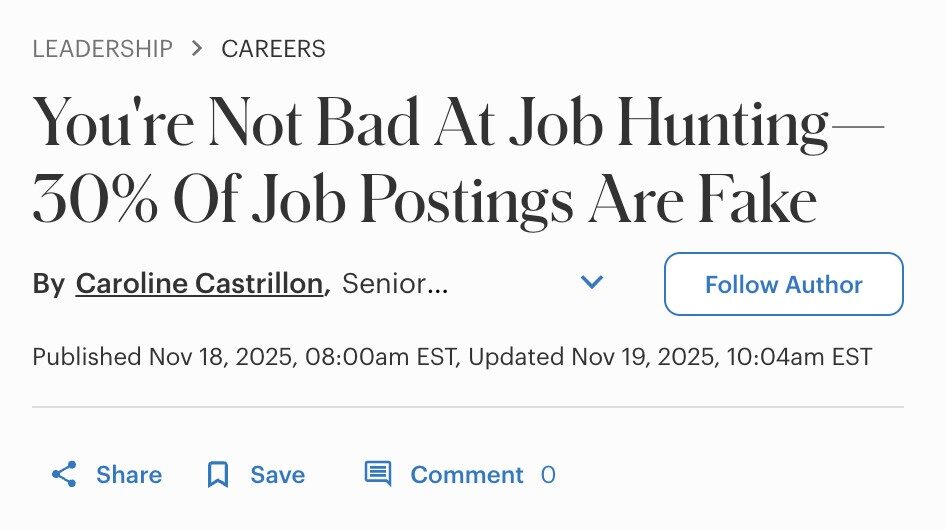
What we’re seeing with this trend is a fundamental breakdown in the hiring process that affects everyone, from job seekers wasting time on applications that go nowhere, to companies struggling to fill legitimate roles because candidates no longer trust their postings.
10 ways to spot fake job postings in tech
1. The Role Sounds Too Generic
For your microservices architecture, you need someone with specific Docker and Kubernetes experience. Fake postings often describe responsibilities that could apply to anyone—”work with cutting-edge technology” or “collaborate with team members” without naming actual tools, frameworks, or technical requirements.
What to look for: Vague descriptions lacking specific tech stacks, frameworks, or methodologies. A legitimate backend developer role should specify languages (Go, Python, Java), database technologies, and architectural patterns.
2. The Job Stays Open Forever
Based on our experience with similar roles, most tech positions fill within 45-60 days. When you see the same DevOps role reposted month after month, that’s a signal.
What to look for: Jobs that have been active for 90+ days or appear multiple times with slight variations. Check the posting date and set a mental threshold.
3. Postings Appear Right After Layoffs
The reality in today’s tech landscape is that companies often post roles to signal growth or stability to investors and remaining employees, even when hiring freezes are in place.
What to look for: Recent news about company layoffs combined with an unusual number of job postings across multiple departments.
4. Same Job Appears at Multiple Portfolio Companies
This pattern is particularly common among VC-backed startups where founders share networks and recruitment strategies. What appears to be multiple opportunities may actually be coordinated data collection.
What to look for: Identical or near-identical job descriptions posted across different companies in the same investment portfolio, often with the same unusual phrasing or requirements.
5. Tech Stack Doesn’t Match Company Reality
Your React developer who’s only worked with class components might struggle with a hooks-heavy codebase. Similarly, job postings that list technologies the company doesn’t actually use are red flags.
What to look for: Requirements for technologies that don’t align with the company’s product, GitHub repositories, or technical blog posts. A company building mobile apps shouldn’t need embedded systems engineers.
6. Requests for Current Salary Information
While some companies legitimately ask about salary expectations, requests for detailed current compensation early in the process often indicate data collection for market research rather than genuine hiring.
What to look for: Applications requiring current salary, benefits packages, or detailed compensation breakdowns before any interview.
7. Multiple Openings, No Recent Hires
Let’s discuss how this impacts the senior developer position you’re considering. Check the company’s LinkedIn page for actual new hire announcements or team growth indicators.
What to look for: Companies advertising 10+ open positions but showing no signs of team growth on LinkedIn, engineering blogs, or press releases over the past 6-12 months.
8. Job Description Reads Like a Tool Advertisement
The shift toward platform engineering has created new challenges for recruitment, but legitimate roles focus on problems to solve, not products to promote.
What to look for: Excessive emphasis on proprietary tools or internal platforms that feels more like marketing copy than a job description. Phrases like “exciting opportunity to work with our revolutionary platform” without describing actual engineering challenges.
9. Requests for ICP or Industry Contact Information
Here’s what most candidates miss about these postings: when a role emphasizes gathering industry contacts or client information as a primary responsibility for what’s supposed to be an engineering position, it’s not really a tech role.
What to look for: Job descriptions that prioritize “building industry relationships,” “identifying potential clients,” or “gathering market intelligence” for roles that should be purely technical.
10. Recruiters Ghost or Can’t Answer Specifics
Given the current market reality of high competition for quality engineers, legitimate hiring managers are eager to discuss team structure, tech challenges, and immediate priorities.
What to look for: Recruiters who dodge questions about team size, reporting structure, current sprint priorities, or technical challenges. Legitimate technical recruiters can discuss these details or quickly connect you with the hiring manager who can.
LinkedIn job scams: A growing concern
Americans lost over $490 million to fake jobs and business opportunities in 2023, with LinkedIn and other trusted platforms becoming prime hunting grounds for scammers. Scammers are posting jobs nearly indistinguishable from legitimate listings, some appearing on trusted websites like LinkedIn or ZipRecruiter.
The sophistication has increased dramatically. Oscar Rodriguez, LinkedIn’s vice president of product management, admits that online job scams are becoming both more sophisticated and more common, with scammers setting up websites and phone numbers with seemingly professional operators.
Additional warning signs of employment scams
🚩 Financial Red Flags
- Requests for banking information before an offer
- Demands for payment for training, equipment, or background checks
- Offers that come with checks you’re asked to deposit and return portions of
🚩 Communication Red Flags
- Emails from personal accounts (Gmail, Yahoo) rather than company domains
- Exclusively text or WhatsApp-based interview processes
- Poor grammar and spelling in supposedly professional communications
- Unusually urgent timelines or pressure to make decisions
🚩 Process Red Flags
- No actual video or phone interviews
- Requests for Social Security numbers or ID photos before any interview
- Job offer without any technical assessment for engineering roles
- Hiring manager has no LinkedIn profile or isn’t listed as a company employee
Financial privacy is one of the main aspects to look into. If a company asks for any specifics regarding your banking information or requests any kind of payment to enter the hiring process, just move on.
Paying for training or policy in advance should ring your internal alarm.
Report the firm imposing a dummy fee.
How to verify a job posting is legitimate
Research the Company
- Check the company’s official website and verify the job appears on their careers page
- Review their LinkedIn company page for recent activity, employee count, and verification status
- Search Glassdoor and Indeed for reviews from current and former employees
- Look for the company’s GitHub, technical blog, or engineering content to verify they actually work with the technologies mentioned
Verify the Recruiter
- Check the recruiter’s LinkedIn profile for history, connections, and activity
- Verify their email domain matches the company website
- Cross-reference the recruiter with the company’s careers or HR page
- Search for their name plus the company name to verify they work there
Ask Informed Questions
- “What specific technical challenges is the team currently facing?”
- “What’s your deployment frequency and CI/CD pipeline?”
- “Can you walk me through the team’s tech stack and why you chose those tools?”
- “How long has this position been open, and what happened with the last candidate?”
Legitimate technical recruiters and hiring managers should answer these questions with specificity and enthusiasm.
How to make a proper JD?
Writing a precise and enticing job description seems pretty easy. However, many tend to make quite a few (avoidable) mistakes. By doing so, they fail to attract the right people and instantly reject skilled candidates they’d need aboard. If you want to compose a concise and appealing JD, stick with these simple rules:
- Come up with an accurate job title that makes your hiring need clear from the very beginning,
- Avoid using any ninja, lasers, epic phantasy, and other made-up stereotypical titles and vocabulary (just leave those urges at the craziest LinkedIn titles pile),
- Think of company branding and value proposition, and make sure to reflect it throughout the JD,
- Be realistic and precise when describing requirements and job-related responsibilities,
- Separate must-haves from nice-to-haves, and don’t name every single tech skill in the book unless you want to drive prospective candidates as further as possible from your hiring process and positive candidate experience,
- Name the main benefits and pay close attention to the importance of industry trends when it comes to the salary range and comprehensive packages.
That way, you will ensure to draw a few skilled candidates and schedule a first interview in no time. Just be sure to promote the post and reach out to those you want on your team.
What we’re seeing in the current tech market
The demand for cybersecurity professionals continues to grow, but the proliferation of fake postings makes it harder for qualified candidates to find legitimate opportunities. Remote work has fundamentally changed how we evaluate candidates, but it’s also made it easier for scammers to operate without geographic constraints.
For platform engineers and DevOps specialists, the situation is particularly complex. The construction industry had the largest average ghost job rate at 38%, followed by art industry jobs at 34%, and legal jobs at 29%, but tech roles aren’t far behind in certain categories.
How legitimate recruiters operate
A trustworthy recruitment agency will demonstrate:
Industry and Company Knowledge
They understand your tech stack, can discuss current trends (like the AI revolution’s impact on frontend development), and ask informed questions about your experience.
Respect for Your Time and Privacy
They won’t request unnecessary personal information early in the process and will be transparent about salary ranges and client details.
Clear Communication
They provide specifics about the role, team structure, and why the position is open. They’re punctual with follow-ups and honest about timeline and process.
Technical Depth
For specialized roles like senior engineers working with event-driven systems, legitimate recruiters can discuss technical requirements with understanding, not just keyword matching.
Transparent Process
They explain each step, set clear expectations, and maintain consistent contact throughout the interview process.
Protecting yourself from job scams
- Never provide financial information until you’ve verified the company and received a formal offer letter
- Don’t pay for anything related to the application or hiring process
- Verify independently by finding contact information on the company’s official website
- Trust your instincts when something feels off about the process or communication
- Report suspicious postings to the platform (LinkedIn, Indeed, etc.) and to the FTC at ReportFraud.ftc.gov
- Use your network to verify opportunities through current employees or mutual connections
The reality of tech hiring in 2025
With AI reshaping development workflows, the skills we look for in senior engineers are evolving, but the fundamentals of legitimate hiring haven’t changed. Real companies want to showcase their technical challenges, team culture, and growth opportunities. Real recruiters respect your expertise and time.
The rate of hires per job posting has halved over the past five years, from eight hires for every ten job postings in 2019 to four hires per ten postings by 2025. This shift makes it even more critical to focus your efforts on legitimate opportunities rather than wasting time on phantom roles.
Moving forward
The rise of fake job postings and employment scams isn’t just an inconvenience, it’s distorting labor market data, wasting countless hours of candidates’ time, and eroding trust in the hiring process. For tech professionals navigating this landscape, the key is combining healthy skepticism with thorough research.
Before investing significant time in any application, verify the company, research the team, and ask specific technical questions that legitimate hiring managers should be eager to answer. Whether you’re a cybersecurity specialist evaluating a new opportunity or a DevOps engineer considering a platform role, taking these verification steps protects both your time and your personal information.
The tech hiring market remains competitive for qualified professionals, but separating legitimate opportunities from fake job postings requires the same analytical thinking you bring to technical challenges. When something doesn’t add up in a job description or hiring process, trust that instinct and investigate further.
Remember: legitimate companies and recruiters want to demonstrate their value to you as much as you need to demonstrate yours to them. Any reluctance to provide specifics, answer technical questions, or verify their legitimacy through official channels should be treated as a red flag worth investigating.