Career
The best time to look for a new job: A job seekers’ guide
When taking a massive leap and choosing to step out of one’s comfort zone, it’s vital to be proactive and consistent. These are the basic rules for landing a brand-new, more fitting career opportunity. But there’s an extra question to answer: when’s the best time to look for a new job? Well, we’re here to let you in on hiring trends by month. So keep reading, and secure some interviews, positive responses, and offers.
What is the best time to switch companies?
Nearly everyone feels uninspired at work from time to time. However, if the feeling persists, it could be more than a mild Garfield syndrome or an acute case of Monday intolerance. In fact, it is likely a sign that it’s time for a change. There are quite a few reasons for job dissatisfaction. Low pay and the lack of opportunity for personal and professional growth are at the very top of the list. Poor management is another valid justification for those who choose to resign. And finally, being short of true value and meaningfulness drives countless workers to seek career opportunities elsewhere.
Now, according to some experts, the best time to look for a new job is after 2-3 years with a company. Still, if you’re unhappy at work, your job hunt should start sooner. As a matter of fact, we live in an era where job hopping isn’t necessarily a bad thing. Quite the opposite, actually – it’s something of a trend! And it is proven that those who switch jobs more frequently advance faster and get higher raises. So, if you feel burned out, let down, or just chronically bored, start ogling new employers. And follow the simple rules and timing we’re about to discuss.
Job search reality check: What the data shows
Before diving into the best times to search, let’s look at what today’s job market actually looks like. Understanding these trends will help you set realistic expectations and time your search strategically.
Current job market statistics
- More than 90% of employers now use automated systems to filter or rank job applications, with 40% of applications being screened out before human recruiters ever review them.
- As of 2024, 28% of Americans are actively searching for jobs – the highest percentage since 2014, indicating a highly competitive market.
- The average job search now spans about 5 months, with 19.9 weeks being the typical duration as of April 2024. This represents an 11.2% year-over-year decrease, but it’s still a considerable time investment.
- 72% of job seekers report that the job-hunting process negatively affects their mental health, citing prolonged timelines, frequent rejections, and limited employer feedback as major stressors.
- There are currently 7.7 million job openings with only 7 million unemployed people to fill them as of March 2025, indicating a labor shortage despite tough competition for quality positions.
- AI mentions in job postings increased by 170% year-over-year, and 81% of hiring managers now consider AI-related skills a top priority.
Understanding these statistics helps frame your expectations. The job search process takes time, but being strategic about when you apply can significantly improve your odds.
Best and worst times to look for a job
If you’ve been overwhelmed and unmotivated or underpaid for quite a while, that’s your cue. It’s probably a good time to look for a new job. But when is the hiring season, and when not to raise your expectations?
Each month has its unique pros and cons when it comes to recruiting and reviewing applications. The beginning of the year is typically favorable for those who intend to turn the page and get hired. Spring is also known as a great season to look for the next challenge. In truth, these months are ideal for completing the onboarding processes – from the management’s point of view. Since summer usually entails a bit-by-bit type of pace and inspires a collective ode to hedonism before elbow grease, recruiters, HR personnel, and managers often strive to finalize their hiring efforts in April and May. Fall months are also very promising. So even though “back to school” posts, ads, and whatnot are somewhat stale, most employers (and employees) actually do cling to those postulates. Unconsciously, sometimes. And so landing a fantastic new job before November is generally more achievable.
What is the best time to look for a job?
Even though January and February are known as the months when people are most likely to get hired, you may encounter slower-than-usual responses in the first two weeks of January. This happens because many employees still need to return from their vacation. But generally speaking, these are pretty great months to camp on the potential employers’ doorsteps.
Now, as we said, springtime is a fantastic period to pursue brand-new jobs. However, there’s one tiny disadvantage – other job seekers rely on this information too. So, it is possible that the competition will be higher if you apply in April or May. September and October are the ultimate slices of utopia for people on a mission to seize the next career opportunity. Everyone is still feeling fresh and well-rested after their vacation, and both hiring managers and candidates are in the mood for some go-getting. Also, as we approach the coldest months, everything starts to feel urgent. Blame it on human nature or Game of Thrones, but that’s how recruitment and hiring are, my sweet summer child.
It’s official: February is a peak hiring month!
If we had to choose a perfect month to look for a new job, it’s definitely February. Here’s why:
- The holiday season’s absence with a dash of do-nothingness is finally over,
- Companies have their aims in order and their budget on point,
- The competition is more likely to go after your (mutual) dream job in a month or two.
Lastly, if a company posts a vacancy in January, this is the moment when they’ll start to schedule interviews.
Bonus tip: What day of the week is best for a job search?
Studies show that most people apply for new jobs on Tuesdays. And because of that, many consider this day to be the ideal workday to submit a resume. But still, research suggests that applicants have a 20% success rate if they go by this rule. So, Tuesdays are less than perfect, to be frank. Surprisingly (or not), it turns out that Monday grants you the best odds of receiving a positive response from a potential employer. The math is simple – while Tuesday drives the most application traffic, Monday is the ultimate productivity-fused day of the week. It gives you a 10% higher chance of being noticed and interviewed. Since recruiters and hiring managers are also prone to embracing a fresh start, they’ll undoubtedly be thorough yet quick when reviewing CVs, portfolios, and cover letters.
⚠️ Lastly, make sure not to apply on a Saturday. Research shows that this day offers only up to a 14% success rate.
The worst time to look for a new job
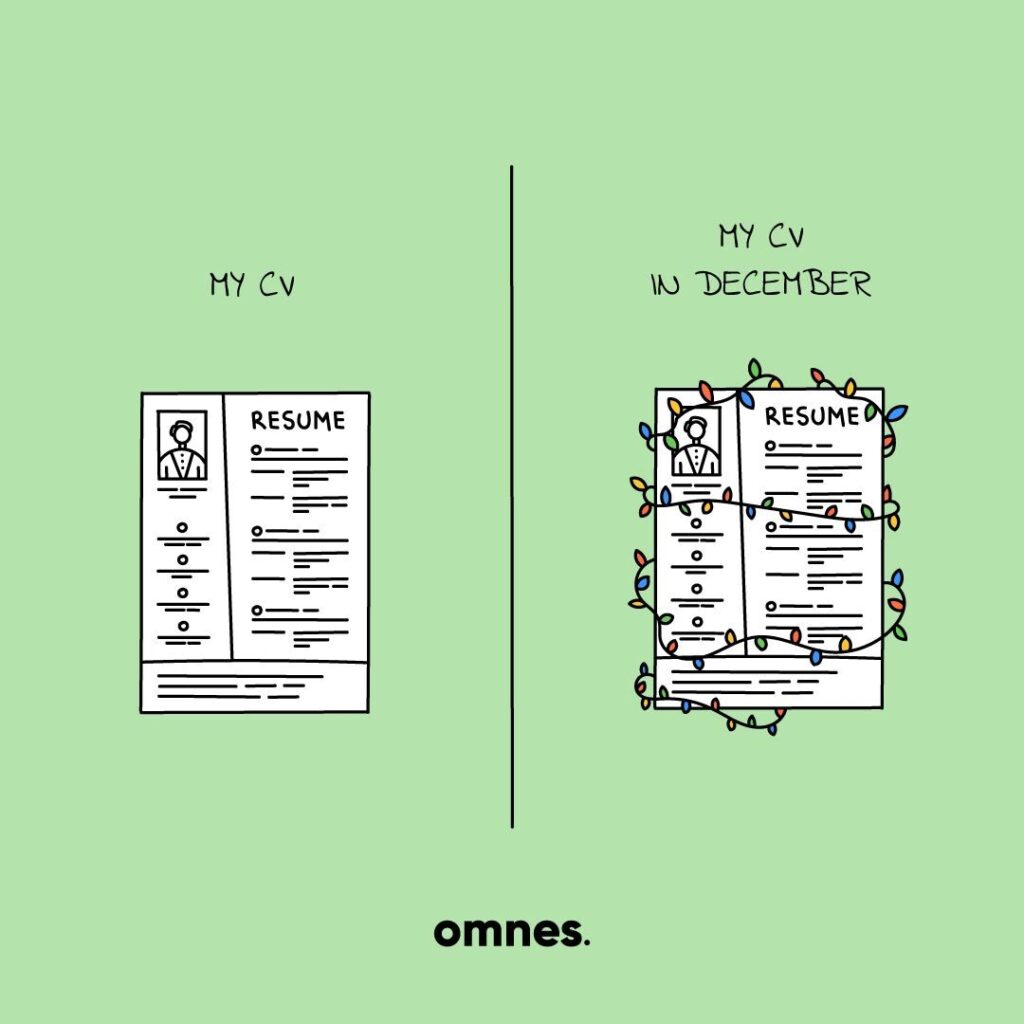
Typically, December is the slowest month for job seekers and hiring managers. Firstly, it is because people tend to use a substantial chunk of their vacation time during this month. They often travel out of state or make other holiday plans. So, during times of festivity and starry-eyed resolutions, it is common for businesses to catch employees working at a slower pace.
Also, this is the month when companies review and restructure their budgets. They dedicate their time to performance reviews and hand out bonuses, which can leave less financial means for new employees and less time to evaluate future hiring needs.
However, as we’ll discuss later, December has hidden advantages for strategic job seekers.
While conventional wisdom suggests December is the worst time to job search, savvy candidates know better. In fact, December presents a unique and strategic opportunity, especially when it comes to working with recruitment agencies and external recruiters. Here’s why you should be actively reaching out to them during the holiday season.
Recruiters are working harder than ever in December
Here’s a secret that most job seekers don’t know: while many companies slow down their hiring in December, recruitment agencies and external recruiters are actually ramping up their efforts. Why? Because they’re racing against the clock to meet their year-end KPIs.
Recruitment professionals are typically measured on several critical KPIs:
- Number of placements made – Their primary success metric
- Time-to-fill ratios – How quickly they can match candidates to positions
- Quality of hire metrics – Candidate retention and performance
- Revenue targets – Total billing from successful placements
- Client satisfaction scores – Maintaining strong relationships with hiring companies
As December rolls around, recruiters are often working extended hours, staying late to hit these targets before the year closes. Their bonuses, promotions, and professional reputations depend on meeting these goals. This creates a golden opportunity for job seekers.
What this means for you:
1. More attention and faster response times
With fewer candidates actively job searching in December, recruiters have more time to focus on each individual application. While you might wait days or weeks for a response in February or March, December applications often get reviewed within 24-48 hours. Recruiters are motivated to move quickly to close deals before year-end.
2. Less competition for their attention
Most job seekers mistakenly pause their search during the holidays, assuming nothing is happening. This means recruitment agencies have smaller candidate pools to work with, making your profile stand out more. You’re competing against fewer people for the recruiter’s time and advocacy.
3. Access to January opportunities early
Many companies brief their recruitment partners in December about roles they plan to fill in January. By connecting with recruiters now, you get first access to these opportunities before they’re widely advertised. Recruiters will already have you in mind when these positions open, giving you a significant head start over candidates who wait until January to begin their search.
4. Strategic Year-End Hiring Still Happens
Some companies actually prefer to hire in December for strategic reasons:
- Budget use-it-or-lose-it scenarios: Organizations need to utilize approved headcount before fiscal year-end
- Business-critical roles: Positions that can’t wait until January to fill
- Temporary-to-permanent opportunities: Year-end projects that often convert to full-time roles
- Strategic hires: Forward-thinking companies positioning themselves for Q1 success
How to Effectively Connect with Recruiters in December
- Don’t wait for recruiters to find you. Take initiative by:
- Identifying specialized recruitment agencies in your industry whether that’s tech, healthcare, finance, marketing, or other sectors
- Sending personalized LinkedIn connection requests to recruiters who specialize in your field. Mention you’re actively exploring new opportunities for early 2025.
- Registering with multiple agencies – Don’t limit yourself to just one. The more recruiters who know about you, the better.
- Following up on previous conversations – If you’ve worked with recruiters before, December is perfect timing to reconnect.
2. Be strategic in your approach
- Make your availability clear – Tell recruiters when you’re available to start and that you’re ready to move quickly
- Be specific about your goals – Share your target roles, salary expectations, and must-haves
- Show flexibility – Being open to different opportunities increases your chances of placement
- Provide all necessary documentation – Have your updated resume, portfolio, and references ready to go
- Respond promptly – When recruiters reach out, reply quickly. Time is money for them in December.
How to reach out to recruiters
Your message to recruiters should be concise, professional, and highlight your readiness:
Example message:
Hi [Recruiter Name], I’m actively exploring new opportunities in [your field] and would love to connect. I have [X years] of experience in [key skills/industry], and I’m particularly interested in [type of roles]. I understand this is a busy time of year, but I wanted to reach out now to be on your radar for any opportunities closing out 2024 or starting in early 2025. I’m available for a quick call at your convenience. Looking forward to connecting!
The Reality: December Success Stories
According to industry data and recruiter testimonials:
- Search firm recruiters report that November and December are often among their top billing months
- Jobs posted in December are frequently business-critical and need to be filled quickly
- Candidates who stay active during the holidays face significantly less competition
- Many successful placements happen in December for positions starting in January or February
- Motivated job seekers in December are often viewed as more serious and committed by recruiters
Types of roles recruiters focus on in December
- Senior-level positions that have been open for several months
- Contract and temporary roles with high conversion rates to permanent positions
- Project-based opportunities for Q1 launches and initiatives
- Hard-to-fill technical roles where specialized skills are required
- New positions approved late in the year that need to be filled immediately
Don’t make these December mistakes
- Completely pausing your search – Staying visible is key
- Being unreachable during holidays – Check emails and LinkedIn regularly
- Assuming recruiters aren’t working – Many work extended hours in December
- Waiting until January to start networking – You’ll miss early opportunities
- Not having your materials ready – Be prepared to move quickly
Summer is rarely the high point of a hiring season.
July and August could be challenging months for a job seeker. Much like in December and early January, vacations and getaways could get in the way (if you get the pun) of your hot, lucrative, and inspiring new role. For instance, if a company’s recruitment specialist or hiring manager is a parent, the odds of them not taking a glance at their email, LinkedIn, or firm’s ATS are close to the absolute 100. Now, not all companies share the same policies. And not all recruiters and managers have the same routines and preferences. So, yes – you should still be reviewing job postings and reaching out to recruiters. You could still land an offer, even if a specific time of the year is notorious for being lazy and passive.
How to prepare for a job search
Regardless of whether the hiring season is in full swing or postponed due to mass enjoyment, financial planning, or something else, every active and passive job seeker must be armed with a few tricks. By following a few simple rules and tested tips, you’ll certainly increase your chances for success when the moment comes. From a freshly updated resume to reaching out, applying, and following up – make sure to know and use these techniques.
Step 1: Optimise your resume
As you move forward and grow throughout your career path, you will learn new skills and refine the ones you’ve already had. Simultaneously, you will need to tailor your resume and update it regularly. The best way to keep your CV and LinkedIn profile fresh is by reviewing and revamping them quarterly. That way, you’ll be ready to apply for all the enticing job opportunities that pop up while you scroll. You could try to keep up by setting a reminder on your calendar and scheduling these resume renewals.The fundamental rule to follow when creating or refining a resume is to keep it clear, concise and boosted with the main keywords. Plus, it should stay as short and sweet as possible, so do your best to keep it two pages long at most. And conclusively, be honest but not too modest. The same guidelines apply to your LinkedIn profile. You can make recruiters come to you by choosing your headline and job title smartly, adding a brief paragraph about your experience and interests, and focusing on telling more about the last two positions you’ve held. Oh, and don’t forget to connect with other industry professionals and recruitment specialists.
Resume best practices
- Keep it clear, concise, and keyword-optimized. With 90% of employers using automated screening systems, your resume needs to be ATS-friendly with relevant keywords from the job description.
- Keep it two pages maximum. Recruiters spend an average of 7 seconds on an initial resume scan.
- Quantify your achievements. Instead of writing ‘improved sales,’ write ‘increased sales by 35% over 6 months.’
- Be honest but not too modest. Showcase your accomplishments confidently without exaggeration.
LinkedIn optimization tips
- Choose your headline and job title strategically with relevant keywords
- Add a brief paragraph about your experience and interests
- Focus on telling more about the last two positions you’ve held
- Connect with other industry professionals and recruitment specialists
- Update your profile with recent projects, certifications, and accomplishments
- Enable the ‘Open to Work’ feature to signal recruiters that you’re actively looking
Step 2: Grow your skill set
Acquiring an in-demand skill or two is always a good idea – especially if you’ve decided that right now is the best time to look for a new job. But aside from the hard skills and industry-specific knowledge that all recruiters and interviewers will certainly appreciate, you should have your soft skills refined too. These can come in handy regardless of whether you’re looking for an on-site or remote job.
Hard skills in demand:
- AI and machine learning competencies – 81% of hiring managers now prioritize these skills
- Data analysis and interpretation capabilities
- Digital marketing and social media expertise
- Cloud computing and cybersecurity knowledge
- Project management certifications
Critical soft skills:
- Communication and collaboration abilities
- Time management and organizational skills
- Flexibility and adaptability to change
- Problem-solving and critical thinking
- Independence and self-motivation
Consider enrolling in online courses to amplify these capabilities. Platforms like Coursera, LinkedIn Learning, Udemy, and edX offer industry-recognized certifications that can boost your marketability significantly.
Step 3: Create a strategic application plan
Even the most efficient recruitment and hiring processes take time and patience from all parties. So, if you’re keen on landing that career opportunity, don’t stall, and don’t lose focus. The season might be slow, but your actions should be smart and consistent.
Application strategy tips:
- Follow up strategically. Send a polite follow-up email 1-2 weeks after applying if you haven’t heard back.
- Set weekly application goals and stick to them. Jobseekers who submit between 21-80 applications have about a 30.9% probability of receiving a job offer, compared to just 27.2% for those who submit 1-10 applications.
- Quality over quantity matters. Research shows that more than half of recent hires applied to 5 or fewer jobs in their last job search, focusing on being selective and thorough.
- Double-check if you’re a good match. Carefully review the job description and compare it with your previous experiences and skills before applying.
- Tailor your resume for each application. Use keywords from the job posting to pass through ATS systems.
- Track your applications systematically. Use a spreadsheet or job search management tool to monitor where you’ve applied, when, and the status of each application.
Step 4: Practice and prepare for interviews
While scrolling, seeking, and waiting for a reply, don’t miss out on practicing your interview skills. You should keep prepping a variety of responses to the most common questions for your position and niche.
Interview preparation essentials:
- Practice with mock interviews using online tools or with friends
- Research the company thoroughly – understand their mission, values, recent news, and culture
- Prepare STAR method responses for behavioral questions Situation, Task, Action, Result
- Practice common technical questions specific to your field
- Prepare thoughtful questions to ask the interviewer
- Set up a professional space for video interviews with good lighting and minimal distractions
Step 5: Leverage multiple job Search channels
Don’t limit yourself to one job search method. According to recent data, the most effective job search strategies involve multiple channels:
- Referrals (71.3% of job seekers use this channel) – The number one way people discover jobs, with referrals being 5x more effective than other hiring sources
- Professional networking sites like LinkedIn (55%) – 87% of recruiters use LinkedIn weekly
- Company career pages (49.5%) – Apply directly through company websites for better visibility
- Job boards like Indeed, Glassdoor, and specialized industry platforms
- Recruitment agencies and staffing firms – especially effective during certain times of year
- Social media platforms – surprisingly, 1 in 5 Gen Z applicants have landed interviews via TikTok
- Professional associations and industry events
Step 6: Network actively and strategically
According to surveys, recruiting and talent acquisition specialists account for 5% of all US LinkedIn profiles, and more than 87% of them use this network weekly. Networking remains one of the most powerful job search tools.
Effective networking strategies:
- Build and maintain your professional network before you need it
- Attend industry conferences, webinars, and virtual networking events
- Join professional associations related to your field
- Engage meaningfully on LinkedIn by commenting on posts and sharing valuable content
- Conduct informational interviews with people in roles you’re interested in
- Reconnect with former colleagues and classmates
- Use holiday parties and professional events as networking opportunities
Step 7: Take Care of Your Mental Health
Remember that 72% of job seekers report that job hunting negatively affects their mental health. It’s crucial to:
- Set realistic expectations about timeline and outcomes
- Create a structured daily routine that includes job search time and personal time
- Celebrate small wins like getting an interview or positive feedback
- Take breaks when needed – job searching is a marathon, not a sprint
- Seek support from friends, family, or professional career counselors
- Don’t internalize rejections – they’re often about fit, not your value as a professional
Seize the best time of year to look for a new job
Although there is such a thing as the absolute best time to look for a new job, you shouldn’t overthink it. Because peak hiring season or not, you will get an interview scheduled in no time if you do your leg work and homework. So keep your resume fresh, your skills up to date, and the apply button warm.
Remember: The job search statistics show that persistence pays off. While 72% of job seekers report emotional challenges, those who maintain consistency, leverage multiple channels, and stay strategic about timing are the ones who succeed. The average job search takes 5 months, but with the right preparation, timing, and approach – especially by connecting with recruiters during their December KPI push – you can significantly improve your odds.